High Atlas Travel Guide: Valleys, Villages & Hiking
The High Atlas is a mountain region of distinct valleys, villages and seasonal access—not one viewpoint outside Marrakech. Choose a valley and walking level first, then build the route around road time, elevation and weather.
The High Atlas is a chain of valleys, plateaus, passes and villages rather than one excursion outside Marrakech. Ourika, Imlil, Ouirgane, Aït Bougmez and the Tizi n’Tichka corridor offer very different road access, walking levels and reasons to stay.
A day trip can introduce a lower valley, but it also concentrates visitors into the same hours and roadside stops. One or two nights create space for a village walk, local hosting and a route selected around the group’s ability rather than the pressure to reach a famous waterfall or summit.
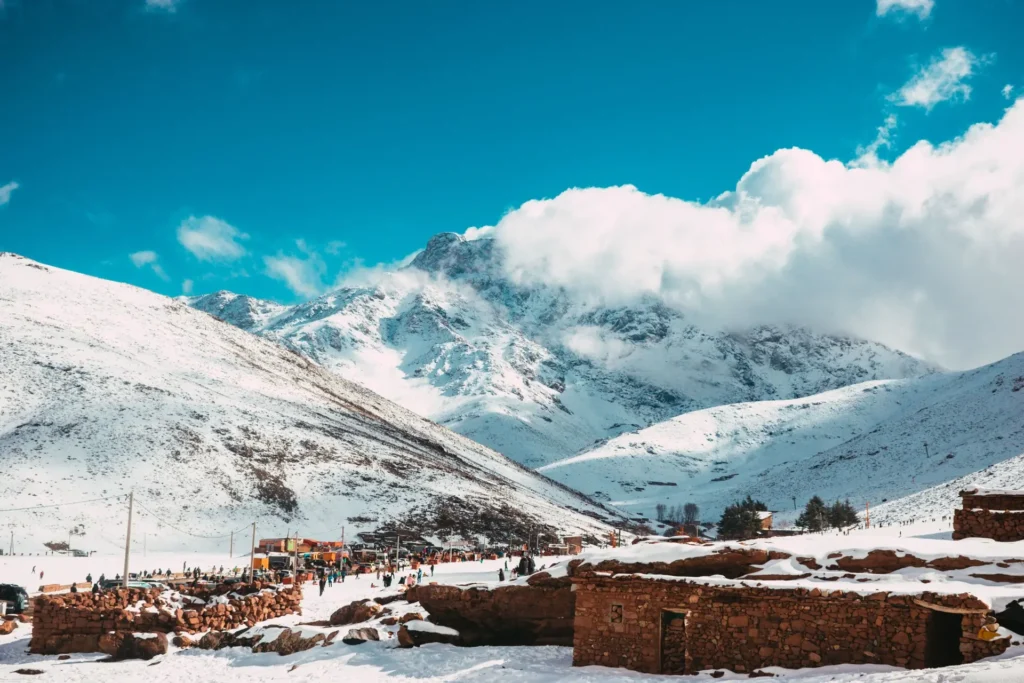
Altitude changes the plan. Snow, rain, summer heat, road repairs and trail condition can affect both high routes and seemingly simple crossings. Distance alone does not describe a walk; ascent, footing, exposure, river crossings and vehicle access all matter.
Make the visit count
Best things to do in High Atlas.
01
Choose a valley before choosing an activity
Match the destination to your wider route: a Marrakech-side valley for a short stay, Aït Bougmez for deeper mountain time, or Tizi n’Tichka as a crossing toward Aït Ben Haddou and the south.
02
Walk at the group’s real level
Discuss ascent, descent, surface, altitude and total time with a qualified local guide. Families and older travelers can enjoy village paths without being pushed toward a waterfall climb or summit objective.
03
Stay overnight in the mountains
A guesthouse stay changes the rhythm from excursion traffic to quieter evening and morning hours. It also gives weather flexibility and more direct support to local hosts.
04
Treat the Atlas crossing as a journey
The road toward Ouarzazate offers changing geology, villages and high-pass conditions. Keep timing flexible and do not promise fixed arrival hours when weather or road works intervene.
Weather and timing
Choose the season around the experience.
March–May
Lower valleys often suit walking and cultivated landscapes are greener, while snow may remain on high routes. Conditions differ sharply by elevation.
June–September
Higher valleys offer relief from city heat, but exposed lower paths can still be hot. Start walks early and confirm water, shade and vehicle access.
October–November
Autumn often supports valley walking and southern crossings before deeper winter conditions. Shorter daylight should shape longer hikes.
December–February
Snow, ice, rain and cold can change trails and passes. Winter visits can be rewarding, but accommodation heating, road condition and local mountain advice become essential.
Build a realistic route
How to include this destination.
Route fit
Route fit
For a first introduction, spend one or two nights in a valley accessible from Marrakech. Longer walkers should select a base and route rather than changing valleys daily. When continuing south, treat the Tizi n’Tichka crossing as a transport day with meaningful stops—not as proof that the itinerary has included a full Atlas experience.
Accommodation
Accommodation
Village guesthouses range from very simple family lodging to comfortable retreats. Confirm private or shared bathroom, heating, hot water, stairs, road access, luggage transfer and meal arrangements. A property may be close on a map but reached by a steep walk, which matters for children, older travelers and heavy luggage.
Travel well
Practical local advice
Use a qualified local mountain guide for unfamiliar trails and changing conditions.
Describe mobility, footwear and walking experience honestly before the route is chosen.
Carry sun protection, water and warm layers even when Marrakech is hot.
Ask before photographing homes, fields or people, and avoid distributing sweets or money casually.
Follow current local advice after rain, snow or road damage rather than relying on an old itinerary.
Can I visit the High Atlas in one day from Marrakech?
Yes for a lower-valley introduction, but an overnight gives a calmer pace and more flexibility. A day trip should focus on one area rather than trying to combine several valleys.
Are High Atlas walks suitable for children?
Many village paths can be adapted for families, but suitability depends on age, heat, ascent and footing. The route should be chosen after discussing the child and current conditions.
Do I need a guide for every Atlas walk?
Short, clearly established local paths may be simple, but a guide is strongly recommended when navigation, weather, altitude or village access is uncertain.
Is the Tizi n’Tichka road the same as visiting the High Atlas?
It is a scenic crossing through the range, not a complete mountain stay. Add a valley walk or overnight when mountain life is an important part of the trip.
Your Morocco, privately designed
Let the journey begin.
Tell us how you like to travel. We’ll turn it into a route worth remembering.