Desert ritual
Camel Trekking in Morocco’s Sahara
Understand what a Sahara camel ride really involves—from meeting the handler and mounting safely to choosing a short sunset outing or a supported multi-day trek.
At a glance
Why it matters
Camel trekking works best when the route decides the riding point.
Camel trekking is a slow desert activity, not a race or a transfer for heavy luggage. Short rides are normally timed for cooler light, while longer treks require walking ability, suitable clothing and a support plan.
The experience changes by location. Erg Lihoudi is close to M’hamid; Erg Chigaga requires a separate 4×4 crossing; Erg Chebbi has paved access to dune-edge villages. Your route should determine the riding point rather than adding an unnecessary detour.
Why choose it
Why camel trekking feels different from a vehicle transfer.
A measured desert rhythm
Travel at the handler’s pace and notice wind, tracks, vegetation and changing dune light.
Sunset or sunrise
Choose cooler hours for comfort; exact timing changes with season and camp location.
Ride and walk
Guests can alternate riding with walking where the terrain and support plan allow.
Supported longer treks
Multi-day journeys need water, food, camp equipment, animal care and a clear daily route.
Local perspective
Choose the ride length before choosing the photograph.
What changes the experience
Start with the conditions that actually change the activity.
Choose the right format
A one-hour sunset ride, a two-hour dune circuit and a supported multi-day caravan are different products. Choose by riding comfort, walking ability and the amount of desert time you genuinely want—not by the most dramatic label.
Where the experience changes
M’hamid and Erg Lihoudi work well for shorter access. Erg Chigaga combines a 4×4 approach with camel time near camp, while Erg Chebbi has easier dune-edge access. The route should decide the camel program.
Experience flow
What usually happens on the day.
Meet the camel team
Receive mounting guidance and explain any mobility, back, hip or balance concerns before starting.
Leave the settlement or camp
The handler selects a suitable line through firm sand and dunes; the first minutes are deliberately slow.
Pause in the dunes
Dismount only with guidance. Use the stop for walking and photographs without crowding the animals.
Return or continue to camp
A short ride returns to its start or finishes at the arranged camp; longer treks follow the confirmed support itinerary.
Plan well
Details to confirm before you book.
Comfort and suitability
Long trousers, closed shoes and secure sun protection reduce rubbing and exposure. Camel riding may not suit every back, hip, pregnancy or mobility condition; disclose concerns before booking.
Animals and luggage
Do not assume a riding camel carries suitcases. Vehicle or pack-animal luggage arrangements must be stated separately.
Weather
Summer heat can make daytime riding unsuitable. Winter evenings are cold and wind can change the route or timing.
Children
Age alone is not enough to judge suitability. Size, confidence, supervision, route length and current conditions all matter.
What to bring
Bring what the day actually needs.
- Long trousers and closed shoes
- Sun hat, sunglasses and sunscreen
- Water in a reusable bottle
- Warm layer for winter sunset rides
Participate responsibly
Follow the handler, keep loads reasonable, avoid feeding animals without permission and choose an operator that allows rest, water and calm handling.
Experience questions
Questions to ask before confirming
Can I take a camel directly to Erg Chigaga?
The main approach from M’hamid is normally by 4×4. Camel activity is arranged near the camp or as a separate supported trek; a short ride is not the 60 km transfer.
Do I need riding experience?
No for a short guided ride, but you must be able to mount, dismount and sit with the camel’s movement.
Can I walk instead?
Often yes for part or all of a short outing, subject to route and group arrangements.
Is sunset guaranteed?
The timing can target sunset, but cloud, wind and operational conditions cannot guarantee a particular view.
Continue planning
Routes where camel trekking fits naturally.
Where to experience it
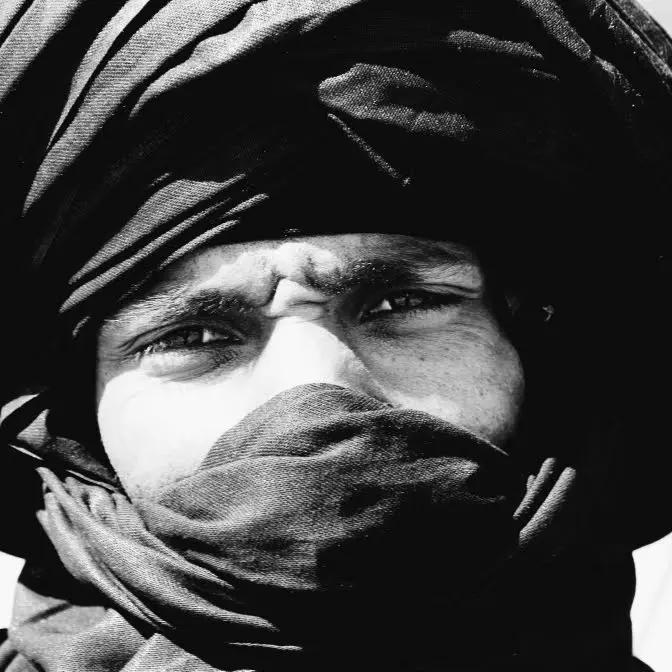
Gateway to the desert
A frontier oasis where the paved road ends and Saharan journeys begin.
Zagora Province
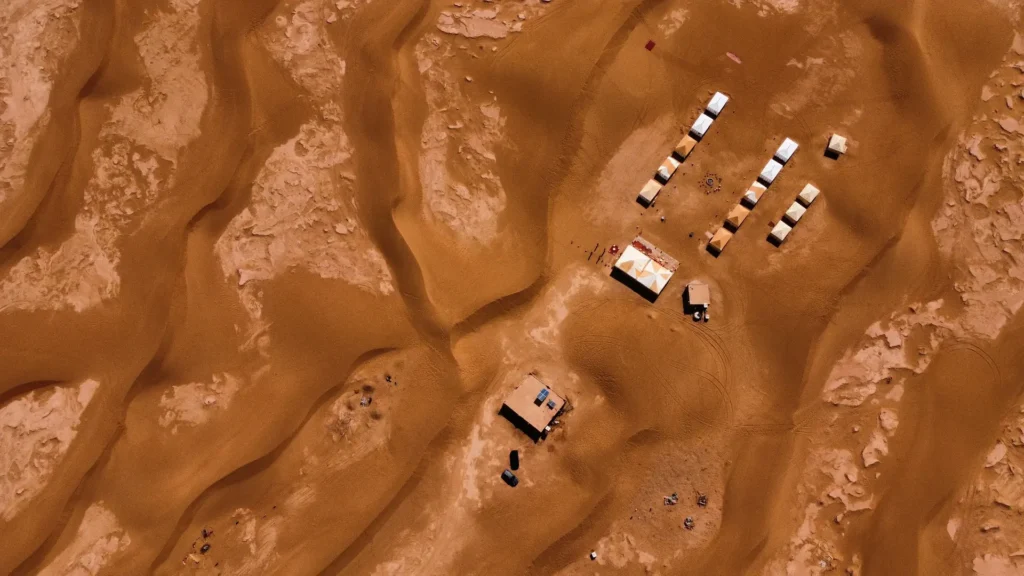
The far Sahara
Vast, untamed dunes reached only by 4×4—the Sahara at its most elemental.
Best October–April
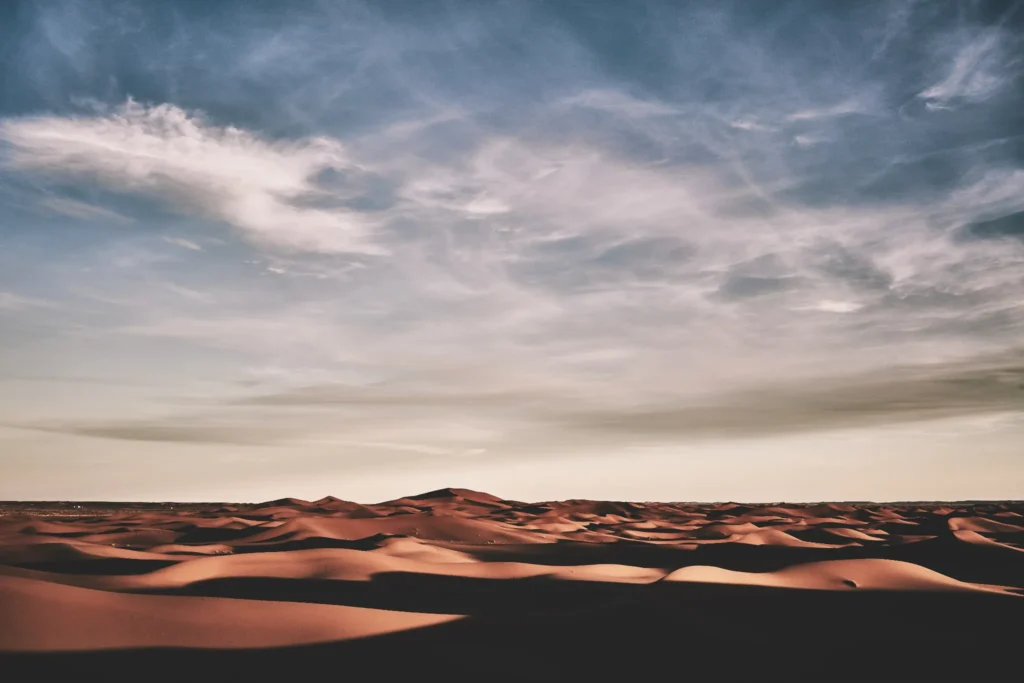
Golden dunes
Morocco’s most iconic dune landscape, with sunrise camel rides and accessible desert camps.
Eastern Sahara
Journeys that fit
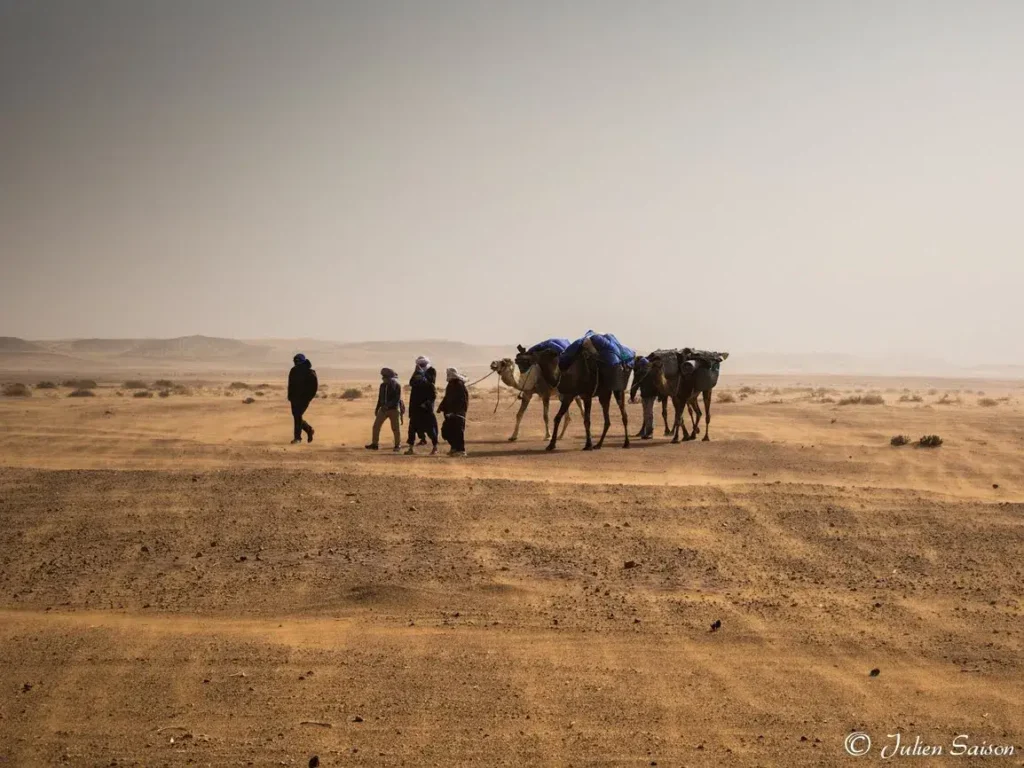
Adventure
M’hamid · Erg Chigaga
Walk with a small caravan through tamarisk shade, open hammada and rolling dunes, camping far from the road.
4 days · Guided trek · from €650
Short escape
M’hamid · Erg Lihoudi
A beautifully paced introduction to the Sahara with camel trekking, campfire music and dune silence.
3 days · From Marrakech · from €450
Desert
Marrakech · Erg Chigaga
Cross the High Atlas, follow the Draa Valley and spend two unhurried nights beside Morocco’s wildest dunes.
4 days · Private 4×4 · from €595
Useful planning guides
Desert guide
An honest local comparison of Morocco’s two best-known Saharan dune regions.
13 min read
Tailor-made in Morocco
Add it only where it fits the route.
Tell us your dates, group and any health, mobility or dietary needs. We’ll confirm the exact place, timing, provider and inclusions before you book.
Considering a camel ride?
Start with the rider, the place and the time of day.
Tell us the group’s ages, mobility and route. We’ll confirm the suitable ride length, location and support.