Travel guide
Responsible Travel in Morocco: Practical Cultural and Environmental Advice
Respectful travel is not a performance of knowing every rule. It means observing, asking, paying fairly and allowing local people to control how their homes, work, animals and traditions are encountered.
The short answer
Ask before photographing people, dress for the setting, agree shopping expectations with guides, bargain without humiliation, reduce waste and water use, choose well-treated animals and support local hosts whose role is clear. Current religious or site rules should always be checked locally.
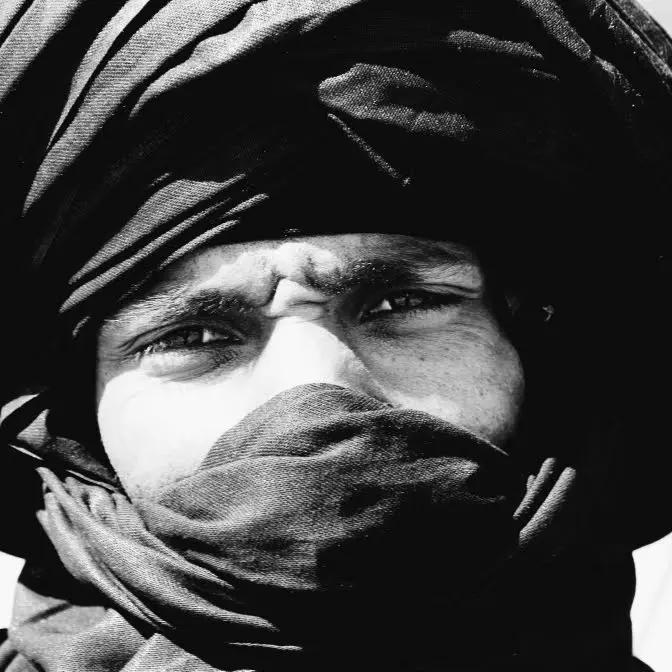
Photography requires consent
A public street is also someone’s workplace or neighborhood. Ask clearly before portraits and accept refusal without bargaining.
Be especially cautious with children, ceremonies, homes and working interiors. A guide cannot always grant consent on another person’s behalf.
Dress for context
Morocco contains many social environments. Comfortable, relatively modest clothing is versatile in villages, medinas and family settings.
Follow specific guidance for religious or private spaces and current site access.
Guides, shops and fair bargaining
Tell a guide whether you want shopping before the visit. A transparent craft stop can be valuable; unwanted pressure is not.
Bargaining should remain friendly. The goal is an agreed price, not proving that a maker’s time has no value.
Homes, food and hospitality
Wait for the host’s lead, ask before entering private areas and communicate dietary needs early.
Hospitality is relational. Show interest without demanding access or turning a family encounter into staged content.
Animals and desert activities
Look for calm handling, suitable loads, rest and water. Speak up if an animal appears distressed.
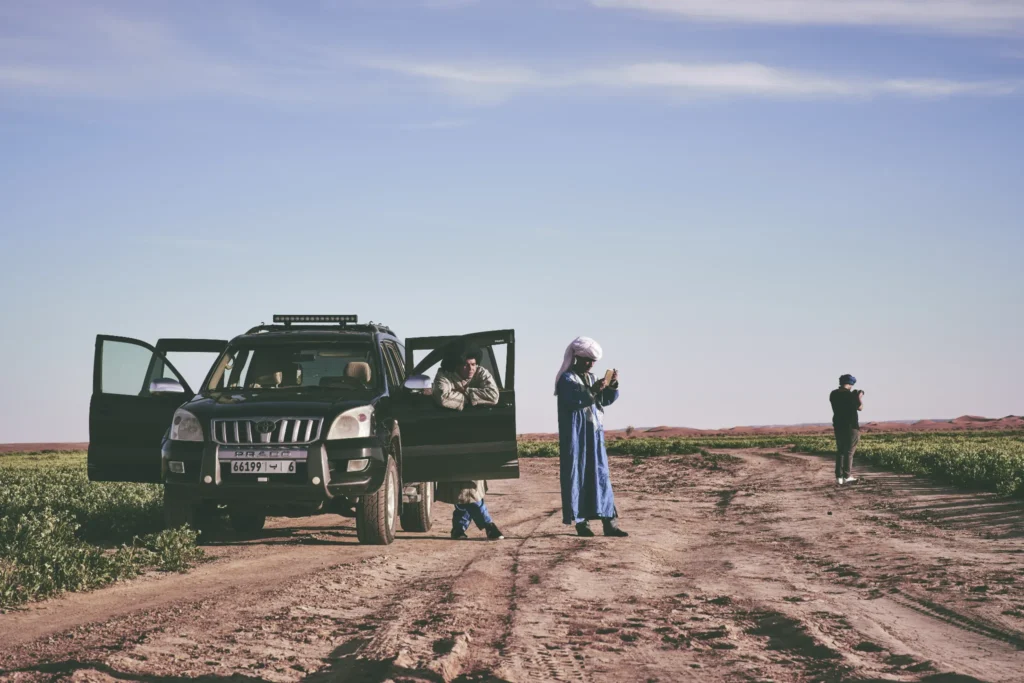
Use established tracks where appropriate, avoid unnecessary dune driving and carry waste out of remote landscapes.
Water, waste and fragile places
Remote camps have limited water and waste systems. Short showers, refillable bottles where safe and reduced packaging make a practical difference.
Do not remove stones, plants or archaeological material, and respect closures around fragile earthen architecture.
Cultural heritage is living
Foodways, music, craft and oral traditions belong to communities, not to tourism brands. Name them carefully and avoid claiming that every performance is ancient or representative of all Morocco.
Support hosts who explain context and consent to recording.
Local planning notes
- Learn greetings and use them.
- Brief guides about shopping boundaries.
- Ask before recording music or stories.
- Spend more time in fewer places.
Questions about travelling responsibly in Morocco
What should tourists wear in Morocco?
Relatively modest, climate-appropriate clothing works broadly; follow local guidance in sensitive settings.
Is bargaining rude?
No, when expected and done respectfully. Pressure and humiliation are never necessary.
Can I photograph people in a market?
Ask before identifiable portraits, even in public spaces.
How can I support local communities?
Use local guides and hosts, pay agreed prices fairly, stay longer and buy directly from makers when you genuinely want the work.
Sources and review notes
This guide combines Sahara Explore’s route-planning experience with published national tourism information.
Reviewed by
Sahara Explore local team
Route planners based in M’hamid El Ghizlane, with a focus on realistic southern Morocco and Sahara logistics. Reviewed 11 August 2026.
Use this answer in the route
Apply responsible choices to the route you actually take.
Related destinations
Gateway to the desert
A frontier oasis where the paved road ends and Saharan journeys begin.
Zagora Province
Road of kasbahs
Film landscapes, fortified villages and the historic threshold between the Atlas and the south.
UNESCO & culture
Recommended experiences
Meet & learn
Share tea, stories and daily traditions with families connected to this land.
Community-led
Craft & design
Meet makers in small workshops and understand the patience behind leather, weaving, pottery and woodwork.
Private local guide
After dinner
Share local rhythm and conversation as camp hospitality, with respectful participation and recording consent.
Selected camp evenings
Recommended journeys
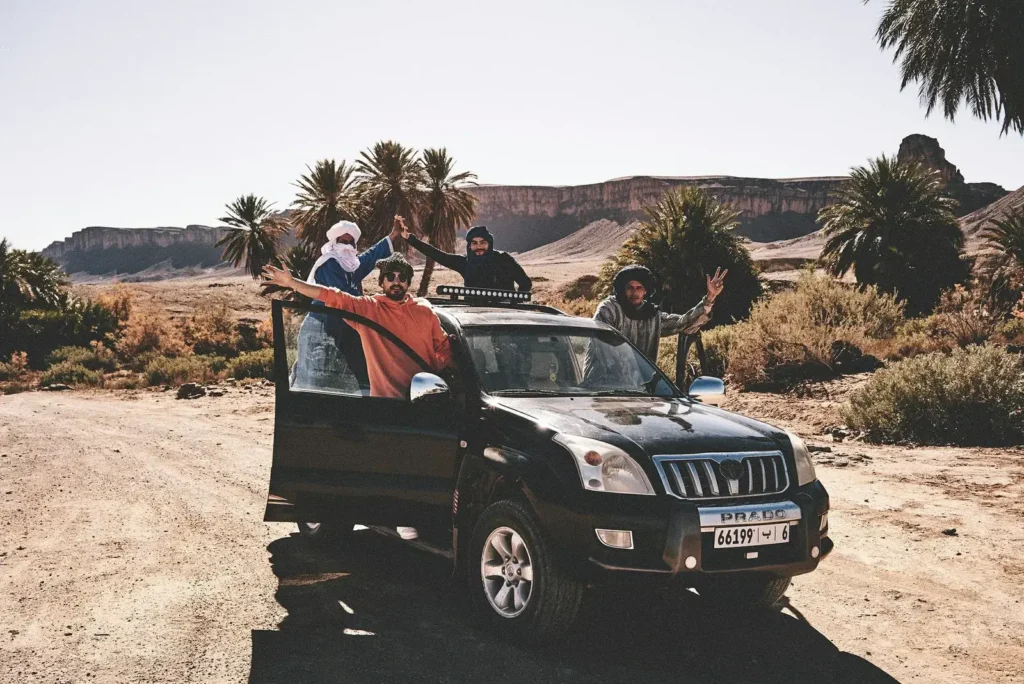
Culture
Draa Valley · Ouarzazate
Follow the old road south through earthen villages, date-palm valleys and living architecture.
7 days · Private journey · from €1,230
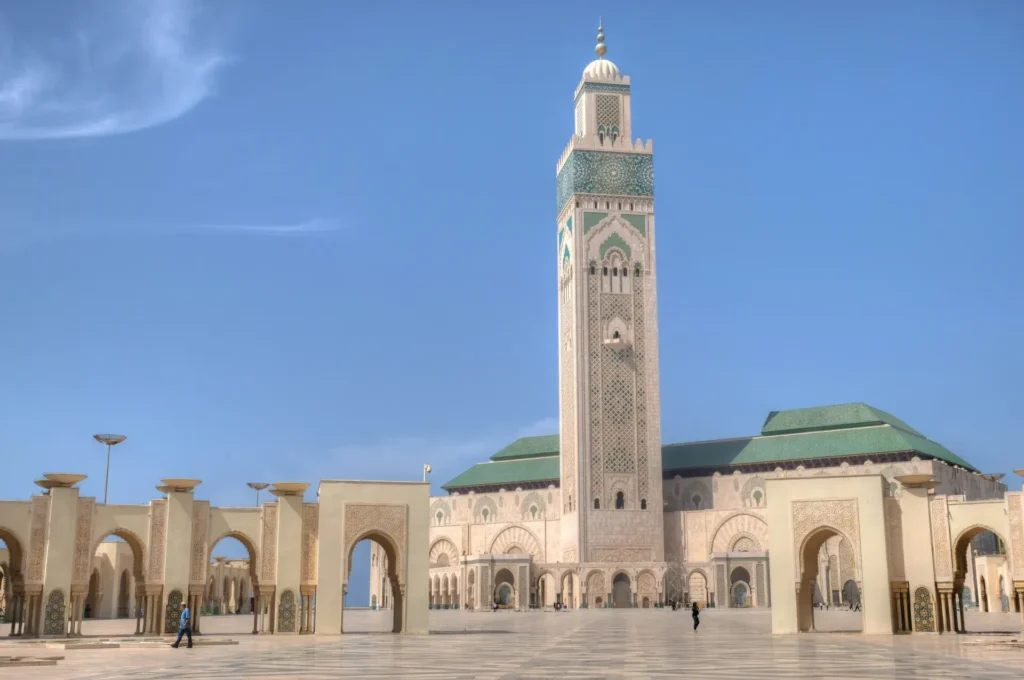
Grand tour
Morocco · Grand Journey
Imperial cities, mountain villages, the Sahara and coast woven into one considered private route.
14 days · Tailor-made · from €2,600
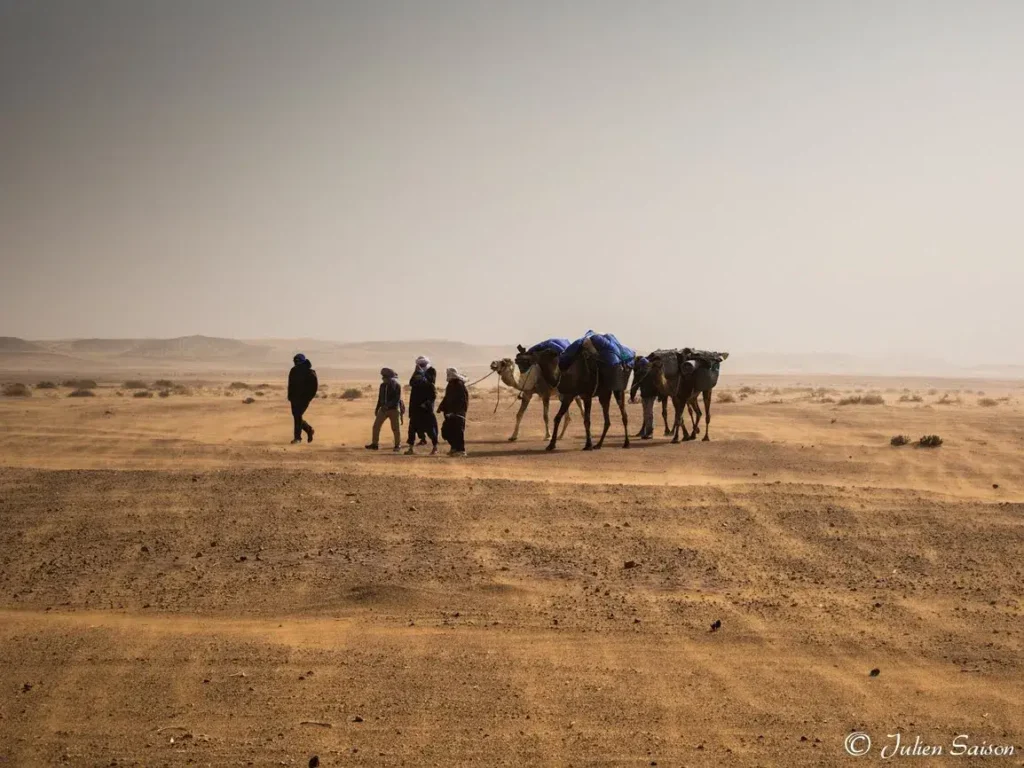
Adventure
M’hamid · Erg Chigaga
Walk with a small caravan through tamarisk shade, open hammada and rolling dunes, camping far from the road.
4 days · Guided trek · from €650
Read next
Practical advice
Currency, connectivity, clothing, tipping, transport and respectful everyday travel, explained simply.
15 min read
Local perspective
Understand the landscape, history and journey beyond Morocco’s final oasis town.
12 min read
Practical advice
The useful essentials for warm days, cool nights and comfortable desert travel.
11 min read
Good to know
More questions about travelling responsibly in Morocco?
Want the trip to benefit the places you visit?
Make the practical choices visible in the plan.
Tell us the route and experiences you are considering. We’ll clarify local guides, host arrangements, transport and environmental limits.